
Canada Worker Permanent Residency Targets News Update: What Changed and What to Watch in 2026
Canada plans to admit 91,500 people through the Provincial Nominee Program (PNP) in 2026, and 92,500 a year in 2027 and 2028. That’s up from 55,000 in 2025, a recovery of about 66 percent. For workers who have been waiting and wondering whether a province will ever call their name, those numbers are a real signal that more spots are coming.
But a national target isn’t a guarantee for any one person. We don’t yet know how many spots each province will get, and eligibility criteria haven’t been confirmed. Those details will shape what this means for you.
For workers in Prince Edward Island and across Atlantic Canada, a few things stand out. As of November 17, 2026, IRCC reports about 7 months to process Provincial Nominee (Express Entry) applications, with roughly 13,800 people waiting. New Brunswick has also changed its Atlantic Immigration Program priorities, including occupation lists and process guidance. Below, we break down what we know, what we don’t, and what to watch, in plain language.
What Changed in Canada’s Worker Permanent Residency Targets

Canada’s updated immigration plan sets higher goals for workers who come through the Provincial Nominee Program (PNP), the route where a province picks people it wants to settle permanently. The plan provides for 91,500 PNP admissions in 2026, then 92,500 in both 2027 and 2028. You can read how the PNP targets for 2026-2028 are laid out.
To see why this is big news, look at 2025. That year’s PNP admissions were 55,000. Compared with that number, the new plan is described as a recovery of 66.36%. For workers and families who felt the squeeze last year, that is a meaningful shift in direction.
Here is the part that matters most to keep in mind. An admission target is a planning number. It tells us how many people the government hopes to welcome in a year. It is not a promise to any one person, and it does not mean your application will be approved. If you want a clearer picture of how this works, see Admission targets explained.
We also want to be honest about what we don’t know yet. The share each province will receive has not been confirmed in the information available. That means Prince Edward Island, and every other province, has no confirmed number we can point to. Please be careful with anyone who tells you exactly how many spots a specific province will get.
Key Developments for PEI and Atlantic Pathways
1. Higher Provincial Nominee Targets Through 2028

Canada’s plan calls for 91,500 admissions through the Provincial Nominee Program (PNP) in 2026, then 92,500 in 2027 and 2028. Compared with 55,000 in 2025, that is a big jump, and it tells us provinces will have a larger say in who gets to build a life here.
In plain terms, a PNP lets a province choose people it believes will fit its own communities and job market. Prince Edward Island does this through the PEI PNP, which allows the province to nominate certain groups for permanent residence:
- Foreign workers: people with job skills that local employers need.
- International graduates: students who studied in Canada and want to stay after finishing school.
- Entrepreneurs: people who want to start or run a business in the province.
A nomination from the province is a major step, but it is not the finish line. The person still has to apply for permanent residence with the federal government.
We want to be honest about what we don’t know yet. The information available doesn’t confirm how many nomination spots PEI itself will receive out of the national total, so please don’t assume a specific number. If a friend or relative is thinking about PEI, that is a good reason to rely on official updates rather than rumours.
2. New Brunswick Updates Its Atlantic Immigration Program Priorities
New Brunswick has updated its Atlantic Immigration Program priorities for 2026, including changes to its occupation lists and its process guidance. If you’re a worker or an employer in the Atlantic region, that kind of shift can change what a path to permanent residence looks like.
Occupation lists often decide who can move forward and who has to wait or look at other options. Guidance on the process can change what documents you gather and what steps come first. For employers, it can affect which roles they’re able to fill through the program. For workers, it can mean the plan you made last year no longer fits.
Here’s the part that’s easy to miss: this article doesn’t say which occupations were added or removed, and you shouldn’t assume your job is on or off the list based on what a friend or an older website told you.
The safest move is to go straight to New Brunswick’s official pages and read the current lists and guidance for yourself. Information from last year, or from social media, may already be out of date.
If the changes leave you unsure where you stand, that’s completely understandable. You don’t have to sort it out alone.
3. Current Processing Times for Provincial Nominee (Express Entry) Applications

As of November 17, 2026, IRCC processing time and waitlist figures show about 7 months for Provincial Nominee (Express Entry) applications, with about 13,800 people waiting. That’s a lot of people sharing the same line.
Numbers like these can feel abstract until you picture what seven months actually holds. For a worker waiting on a decision, it can mean wondering whether a work permit will run out first. It can mean paying rent and covering bills while your future stays on hold. Families may put off big choices, like bringing a spouse or children over, enrolling in school, or signing a longer lease. And the not-knowing wears people down. Many feel stress that never fully lets up, and that’s a completely understandable reaction.
Keep two things in mind. First, processing times change, so the figure you see today may not match what applies months from now. Second, this 7-month estimate covers only this specific application type. Other pathways and applications have their own timelines, so don’t assume the same wait applies to yours.
If you’re unsure how a delay could affect your status, you’re not alone, and help is available.
Why These Changes Matter for Workers and Families
If you’re on a work permit, or you have a cousin or friend thinking about a move to Prince Edward Island or New Brunswick, this news can bring hope and worry at the same time. Both feelings make sense. Waiting on a decision about your future is hard, and the numbers in the headlines don’t always tell you what to do next.
Here’s what the higher targets mean: provinces are expected to play a bigger part in choosing workers, with 91,500 PNP admissions planned for 2026. That is a planning number for the whole country. It isn’t a promise to any one person, and bigger targets don’t make approval easy for everyone. Each stream still has its own eligibility rules, and we haven’t confirmed the details of those rules here. Please don’t assume you qualify, or that you don’t, based on a headline alone.
Timing matters too. As of November 17, 2026, IRCC lists about 7 months for Provincial Nominee (Express Entry) applications. Seven months can affect your work permit, your rent, and your family’s plans.
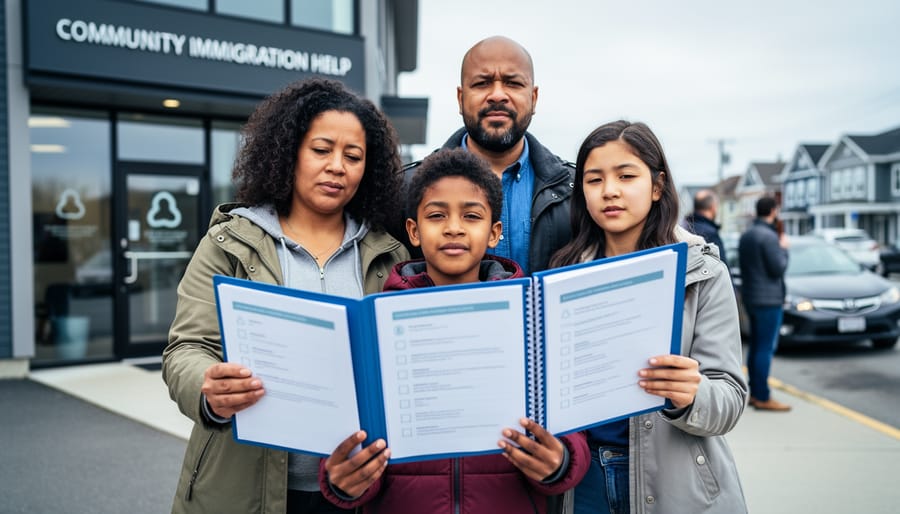
You also don’t have to figure this out alone. Many newcomers in West Toronto have loved ones weighing Atlantic options, and Clia offers free immigration help for low-income individuals and families. Our community is stronger when everyone has support they can trust.
What to Watch Next
Nobody can say yet exactly how the new targets will play out, so the most helpful thing you can do is know where to look. Here’s a simple checklist to keep an eye on:
- Official announcements about how many nomination spots each province will receive.
- Updates to PEI PNP and Atlantic Immigration Program requirements.
- Changes to IRCC processing times, which sat at about 7 months for Provincial Nominee (Express Entry) applications as of November 17, 2026.
- Any new or revised occupation lists, like the ones New Brunswick changed for 2026.
Stick to official government websites for all of this. Social media posts and group chats often repeat old or wrong information, and rules can change without much warning.
Keep your documents organized in one place too: passports, work permits, pay stubs, reference letters, and language test results. When a stream opens or a rule shifts, you’ll be ready instead of scrambling.
Be careful with anyone who promises a guaranteed result or asks for large fees to “secure” a spot. No one can promise approval. If something feels off, ask a trusted community organization before you pay or sign anything. Our guide to free legal resources can point you to support that won’t cost you a cent.
Common Questions About Worker PR Targets and Provincial Nominee Pathways
Questions about worker permanent residency targets come up often, and it’s normal to feel unsure about what the numbers mean for you. Here are some plain-language answers, based only on what has been confirmed.
What is a permanent residency target?
It’s a planning number the government sets for how many people it expects to admit through a program in a given year. It’s a goal for the system as a whole, not a promise to any one applicant. For 2026, the plan includes 91,500 admissions through the Provincial Nominee Program.
Does a higher target mean my application will be approved?
No. A bigger target means more spaces are planned overall, but each application is still reviewed on its own, and the rules for each stream still apply. Eligibility details aren’t confirmed here, so please check the official program pages.
How many spots will PEI get?
That hasn’t been confirmed in the information available, so it wouldn’t be fair to guess a number. Watch for official announcements from the province and the federal government.
How long do Provincial Nominee (Express Entry) applications take right now?
As of November 17, 2026, IRCC lists about 7 months, with about 13,800 people waiting. This applies only to that application type, and times can change.
If you’re also looking at the federal Express Entry side of things, our guide to the CRS calculator explains how scoring works in plain language.
Not every question has a clear answer yet, and that’s okay. You don’t have to sort through these systems alone. If you’re a low-income individual or family in West Toronto, Clia offers free legal help with immigration matters, and our team is happy to talk through your situation with respect and without judgment.
Canada’s plan to admit 91,500 workers through the Provincial Nominee Program in 2026 is real news, and it may offer hope. But a bigger target is a planning number, not a promise for any one person, and it’s normal to feel unsure about what comes next. You don’t have to sort through it alone. If you or someone you love is thinking about work, status, or a move to Atlantic Canada, Clia is here to help. We offer free, community-centric support to low-income individuals and families. Reach out to us or another trusted community organization, and take your next step with someone in your corner.